
Planning a wedding is exciting, but it can also become overwhelming very quickly. There are countless decisions to make, from choosing the venue and finalizing the guest list to selecting the décor, food, entertainment, photography, and outfits.
The challenge isn’t simply deciding what you want. It’s making sure all these elements work together while staying within your budget and timeline.
Starting with a clear plan can make the entire process much easier. When you know how much you can spend, how many guests you’re inviting, what kind of wedding you want, and when each decision needs to be made, you can avoid unnecessary stress and last-minute expenses.
Your dream wedding doesn’t have to mean spending without limits. The goal is to find the right balance between what you envision and what works realistically for your budget. A beautiful celebration can be created at different price points when you prioritize the elements that matter most to you.
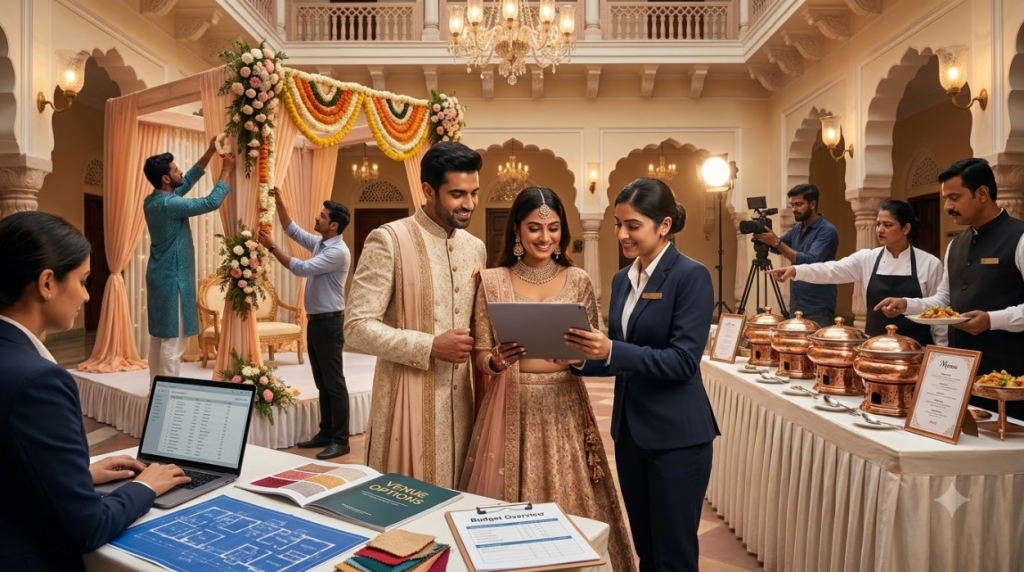
In this guide, we’ll walk through the key stages of wedding planning—from setting your budget and choosing your wedding style to selecting vendors, planning décor, managing guests, and preparing for the big day. Whether you’re planning an intimate gathering or a large traditional wedding, these steps can help you stay organized and enjoy the journey along the way.
What You’ll Discover
Before you start booking vendors or choosing decorations, here’s what you’ll learn from this guide:
- How to create a realistic wedding budget without overlooking important expenses.
- How to build your guest list and choose a venue that fits your celebration.
- How to create a practical wedding planning timeline and know what to do at each stage.
- How to choose the right vendors for décor, catering, photography, entertainment, and other services.
- Popular wedding themes and décor ideas to help you create a celebration that reflects your personality.
- Important questions and details to check before booking any wedding vendor.
- Common wedding planning mistakes and simple ways to avoid them.
- How working with a professional wedding planner can reduce stress and keep everything organized.
By the end of this guide, you’ll have a clearer idea of where to start, what decisions need to be made, and how to bring all the different parts of your wedding together.
Start With Your Wedding Budget
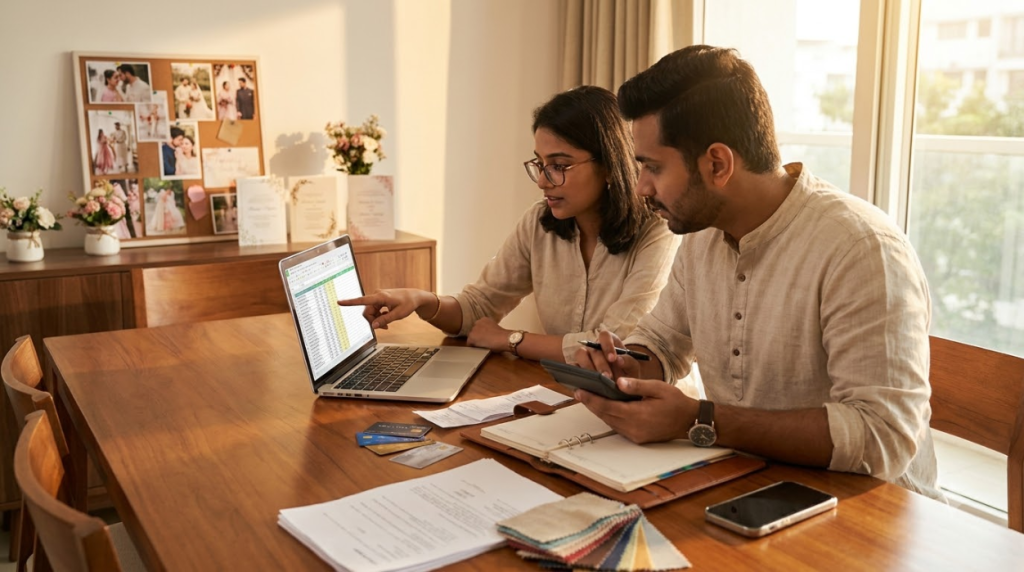
Before you start looking at venues, décor inspiration, or vendors, decide how much you’re comfortable spending on the wedding.
Your budget becomes the foundation for almost every decision that follows. It determines the type of venue you can consider, the number of guests you can invite, the level of décor you can create, and the services you can include.
Start by deciding your overall wedding budget and then divide it between the most important categories. It can be tempting to spend heavily on the things that catch your attention first, but leaving enough room for essential expenses is important.
Separate your expenses into must-haves and nice-to-haves. For example, your venue, catering, photography, and essential ceremony arrangements may be priorities, while additional entertainment or elaborate décor can be adjusted depending on your remaining budget.
It’s also wise to keep a contingency fund for unexpected expenses. Last-minute guest additions, additional décor requirements, vendor overtime, transportation changes, or other small costs can quickly add up during a wedding.
As you make bookings, keep track of deposits, remaining payments, taxes, service charges, and payment deadlines. Having everything recorded in one place makes it much easier to understand how much you’ve already committed and how much is still available.
Suggested Budget Categories
Your wedding budget may include:
- Venue
- Catering
- Décor
- Photography and videography
- Bridal and groom outfits
- Makeup and hairstyling
- Invitations
- Entertainment
- Mehendi
- Transportation
- Accommodation
- Wedding cake
- Gifts and return gifts
- Miscellaneous expenses
You don’t necessarily need to divide your wedding budget equally across these categories. Instead, decide which elements are most important to you and allocate your money accordingly.
For example, if photography is a priority because you want beautiful memories of the day, you may choose to invest more in your photographer and simplify another area such as décor.
Pro Tip: Keep a small portion of your budget aside rather than spending everything on planned expenses. Having a financial cushion can save you from unnecessary stress when unexpected costs appear closer to the wedding.
Decide Your Wedding Style and Theme
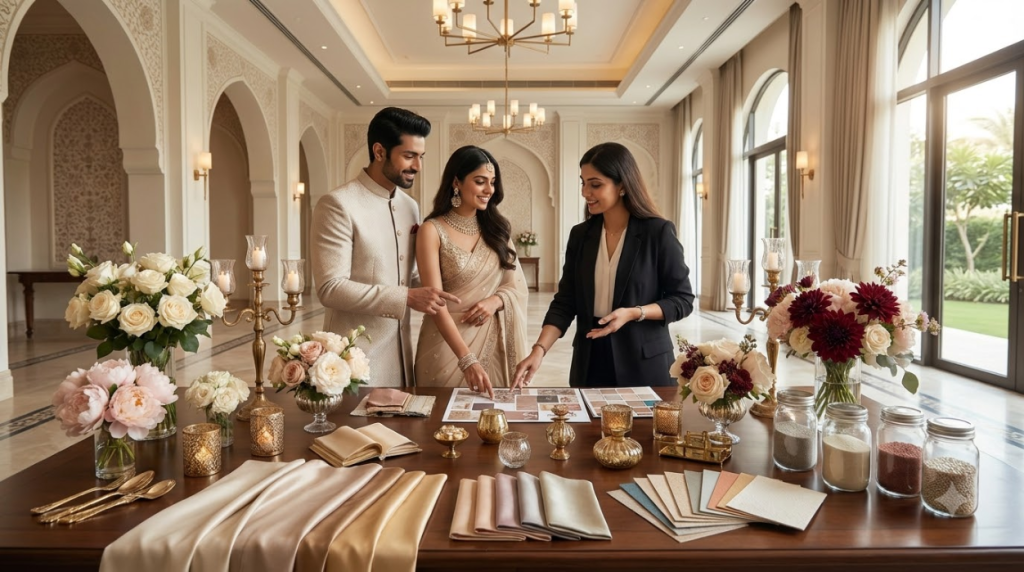
Once you have a budget in mind, think about the kind of wedding you want to create.
Your wedding style will influence everything from the venue and colour palette to the invitations, décor, outfits, flowers, table settings, and even the entertainment.
Start by asking yourselves a few simple questions. Do you want a traditional celebration with cultural rituals? Would you prefer a modern luxury wedding? Are you imagining an intimate garden ceremony or a large destination celebration?
There isn’t one right style for a wedding. The best choice is the one that feels natural to you as a couple.
Wedding Styles to Consider
Traditional Indian Wedding
A traditional wedding can incorporate cultural rituals, traditional décor, ethnic outfits, floral arrangements, and classic ceremony elements. It’s a beautiful choice for couples who want to keep their heritage and family traditions at the heart of the celebration.
Modern Luxury Wedding
Modern luxury weddings typically focus on sophisticated venues, elegant décor, premium dining, statement floral installations, atmospheric lighting, and carefully coordinated details.
Minimalist Wedding
If you prefer simplicity, a minimalist wedding can focus on clean décor, subtle colours, beautiful lighting, elegant floral arrangements, and meaningful details rather than excessive decoration.
Destination Wedding
A destination wedding combines the ceremony and celebration with a travel experience for the couple and their guests. Resorts, beaches, heritage properties, and scenic outdoor locations can create a memorable setting.
Garden Wedding
Garden weddings are ideal for couples who love natural surroundings. Flowers, greenery, outdoor lighting, elegant seating, and open-air dining can create a relaxed and romantic atmosphere.
Royal Wedding
A royal-inspired wedding can feature rich colours, elaborate floral arrangements, grand entrances, ornate décor, traditional elements, and luxurious stage or mandap designs.
Contemporary Wedding
A contemporary celebration combines modern design with selected traditional elements. Think sophisticated colour palettes, modern lighting, geometric décor, stylish furniture, and personalized details.
Intimate Wedding
For couples who prefer a smaller celebration, an intimate wedding allows you to focus more closely on the people and experiences that matter most.
Fusion Wedding
Fusion weddings combine traditions, cultures, or modern and traditional styles to create a celebration that feels uniquely personal to the couple.
Popular Wedding Theme Ideas
Once you’ve chosen a broad style, you can develop a more specific theme around it.
Some popular ideas include:
- Royal Rajasthani
- Floral garden
- Pastel elegance
- Boho
- Minimalist luxury
- Traditional Indian
- Modern glam
- Tropical
- Vintage
- Bollywood-inspired
Your theme doesn’t need to dictate every single detail. Instead, use it as a visual direction that helps your décor, colours, flowers, invitations, and other elements feel connected.
Pro Tip: Before finalizing a theme, create a simple mood board with your favourite colours, décor styles, flowers, venue inspiration, and outfit ideas. This makes it much easier to see whether all your choices work well together.
Create Your Guest List
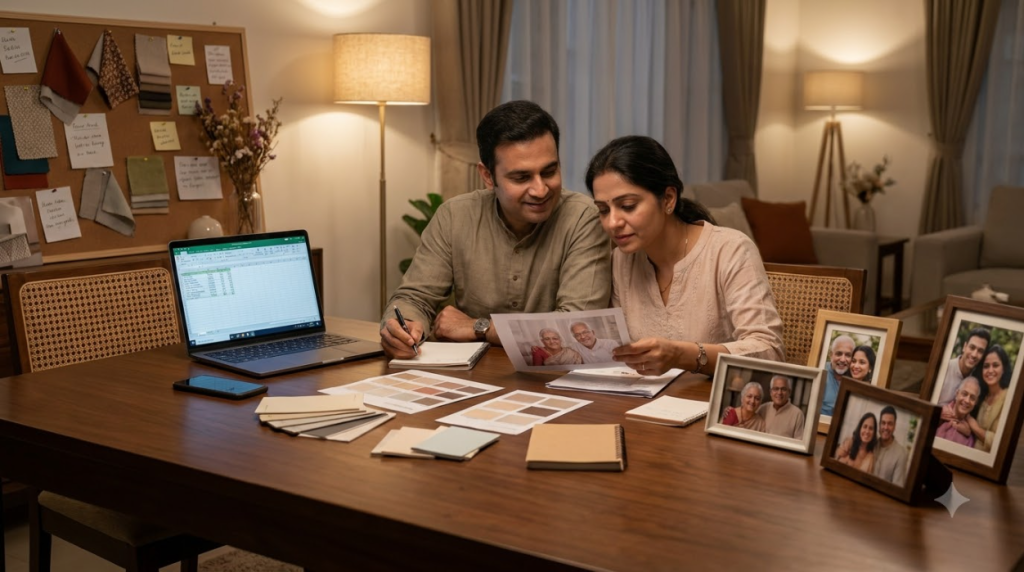
Your guest list is one of the most important parts of wedding planning because it influences almost every major decision that follows. The number of people attending affects your venue size, catering budget, seating arrangements, invitations, transportation, accommodation, and even the amount of décor you’ll need.
Start by creating an initial list without worrying too much about the final number. Divide your guests into groups such as close family, extended family, friends, colleagues, and other important people you would like to have at the celebration.
Once you have the initial list, review it together and decide which guests are essential and which can be included depending on your final budget and venue capacity.
Don’t forget to consider children and accompanying guests. Someone attending with a partner or family may require additional seating and catering arrangements, so it’s better to account for them early rather than make adjustments at the last minute.
As your wedding date gets closer, move from your initial guest list to a confirmed list using RSVPs. Digital invitations and RSVP tools can make this process much easier, especially when you’re managing a large number of guests.
It’s also a good idea to leave some flexibility in your planning. Guest numbers can change because of cancellations, last-minute additions, or unexpected family requirements.
Pro Tip : Don’t finalize your venue capacity before you have a reasonably accurate estimate of your guest count. Booking a venue that’s too small can make the celebration uncomfortable, while choosing a space that’s much larger than necessary may result in unnecessary expenses.
Choose the Perfect Wedding Venue
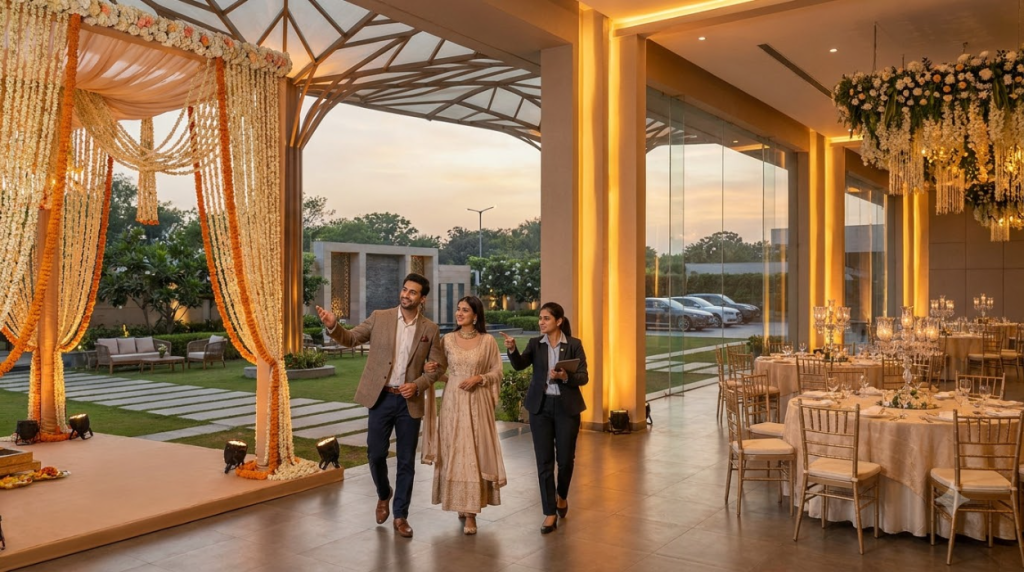
Your wedding venue becomes the setting for almost everything that happens on your big day. It influences the atmosphere, guest experience, décor possibilities, catering arrangements, photography, entertainment, and overall budget.
Start by deciding what type of experience you want. A luxury hotel can provide a polished and convenient celebration, while a garden or farmhouse can create a more relaxed outdoor atmosphere. A banquet hall may work well for a traditional large gathering, while a rooftop or heritage property can give you a more distinctive setting.
When visiting potential venues, don’t focus only on how beautiful the space looks. Think about how it will actually function during your wedding.
Things to Consider When Choosing a Venue
Location
Choose a location that’s reasonably convenient for your guests. Consider travel time, road connectivity, public transportation, and proximity to hotels or accommodation.
Capacity
Make sure the venue can comfortably accommodate your expected guest count. Remember that you’ll need space not only for guests but also for dining, the stage or mandap, entertainment, photography, and other event activities.
Indoor and Outdoor Options
If you want an outdoor ceremony or reception, check whether the venue also has an indoor alternative. Having both options can be particularly useful when weather conditions are unpredictable.
Parking
Adequate parking can make a major difference to the guest experience. Ask how many vehicles the venue can accommodate and whether valet parking is available.
Accommodation
If you’re expecting guests from outside the city, check whether the venue offers rooms or has suitable hotels nearby.
Catering
Some venues have their own catering teams, while others allow outside caterers. Confirm the policy before booking because catering restrictions can significantly affect your planning.
Bridal and Groom Rooms
Private rooms where the couple can get ready, rest, or make last-minute preparations can be extremely useful on the wedding day.
Power Backup
Confirm whether the venue has a reliable backup power system for lighting, air conditioning, sound equipment, catering, and other essential services.
Washrooms
Check whether the washrooms are clean, easily accessible, and sufficient for the expected number of guests.
Accessibility
Think about elderly guests, children, and guests with mobility requirements. Easy access, lifts, ramps, and suitable seating can make the celebration more comfortable for everyone.
Décor Restrictions
Some venues have specific rules about decorations, hanging installations, candles, flowers, nails, adhesives, or structural changes. Ask about these restrictions before finalizing your décor plan.
Vendor Restrictions
Find out whether you’re allowed to bring your own decorator, caterer, photographer, entertainment team, or other vendors. Some venues work exclusively with approved vendors.
Music and Noise Restrictions
Ask about permitted music timings, sound limits, DJ restrictions, and any local regulations that may affect your entertainment plans.
Weather Backup
For outdoor weddings, always ask what happens if it rains or the weather becomes unsuitable. A proper backup arrangement can prevent a major last-minute problem.
Setup and Breakdown Timings
Confirm when your decorators and vendors can enter the venue for setup and how much time they have to dismantle everything after the event.
Wedding Venue Options to Consider
Depending on your wedding style, guest count, and budget, you can consider:
- Banquet halls
- Luxury hotels
- Resorts
- Gardens
- Farmhouses
- Rooftops
- Destination venues
- Heritage properties
Try to visit at least a few venues before making your final decision. Seeing the actual space, speaking with the venue team, and understanding what’s included in the package can help you make a much more informed choice.
Set Your Wedding Date and Timeline
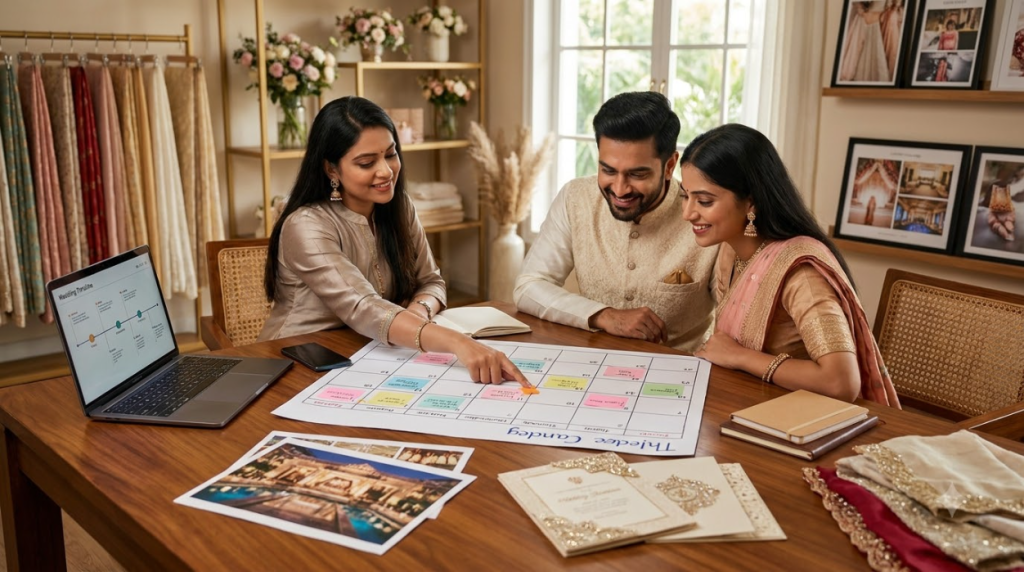
Once your budget, guest list, and venue direction are becoming clearer, it’s time to create a realistic wedding timeline.
Your wedding date doesn’t just determine when the celebration takes place. It can also affect venue availability, vendor availability, travel arrangements, accommodation costs, and sometimes even the overall price of the wedding.
Popular dates and weekends can get booked quickly, so giving yourself enough time to plan can make the process much easier.
Instead of trying to organize everything at once, divide the planning process into stages.
12+ Months Before the Wedding
If you have more than a year to plan, use this time to establish the foundation of your wedding.
Focus on:
- Setting your budget
- Creating an initial guest list
- Deciding your wedding style
- Selecting a date
- Shortlisting and booking the venue
9–12 Months Before
Once the venue and date are confirmed, start securing the vendors who are most likely to get booked early.
Consider booking:
- Photographer
- Caterer
- Decorator
- Wedding planner
- Major entertainment
6–9 Months Before
This is a good time to start finalizing the personal elements of your wedding.
Focus on:
- Bridal and groom outfits
- Invitations
- Makeup artist
- Mehendi artist
- Jewellery
- Guest accommodation
3–6 Months Before
As the wedding gets closer, begin finalizing the details.
This can include:
- Finalizing décor
- Menu tasting
- Entertainment
- Pre-wedding photography
- Transportation arrangements
1–3 Months Before
At this stage, your focus should shift toward confirmations and guest management.
Complete tasks such as:
- Sending invitations
- Confirming vendors
- Updating the final guest list
- Planning seating arrangements
- Confirming ceremony details
Wedding Week
The final week should be about confirming everything rather than making major new decisions.
Make sure you have:
- Confirmed all vendors
- Completed the décor walkthrough
- Scheduled final payments
- Prepared an emergency kit
- Finalized the wedding-day timeline
A detailed timeline can help everyone understand where they need to be and when. Share the relevant parts with your wedding planner, family members, vendors, photographer, and other key people so everyone is working from the same plan.
Plan Your Wedding Décor
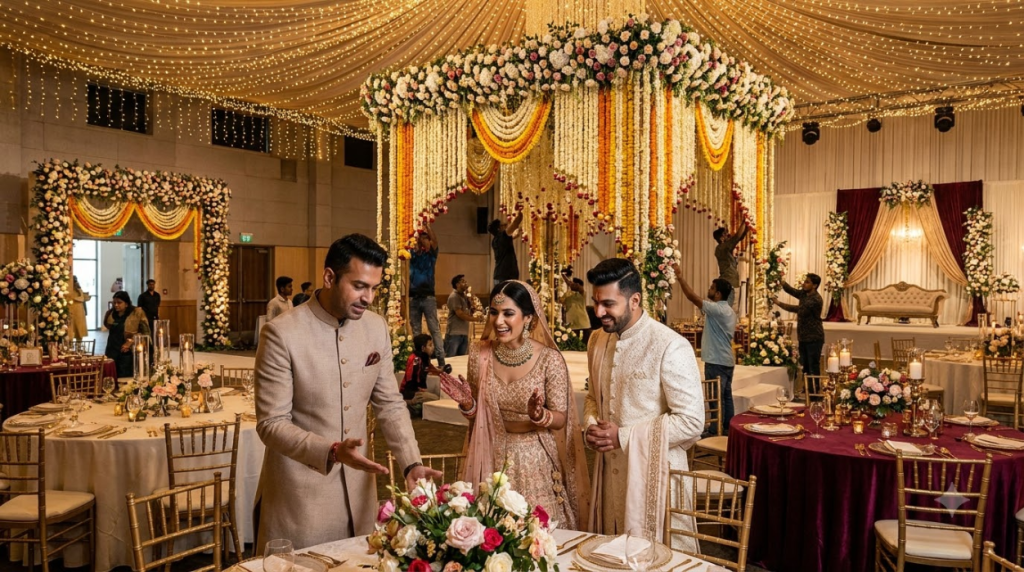
Wedding décor is one of the biggest elements that shapes the look and atmosphere of your celebration. It can transform an ordinary venue into a space that feels personal, elegant, festive, and completely yours.
Start by deciding on an overall visual direction. Your décor should complement the venue rather than compete with it.
For example, a garden venue may work beautifully with natural flowers, greenery, soft lighting, and pastel colours, while a grand banquet hall may suit dramatic floral installations, statement lighting, and richer colours.
Key Wedding Décor Elements
Entrance Décor
The entrance creates the first impression for your guests. You can use floral arrangements, elegant backdrops, traditional elements, balloons, lighting, or personalized welcome décor.
Mandap or Stage Décor
For traditional ceremonies, the mandap is often one of the main visual focal points. Flowers, fabrics, lighting, foliage, candles, and personalized elements can be combined to create the desired look.
Floral Arrangements
Flowers can be used throughout the venue—from the entrance and stage to dining tables, aisle décor, and guest seating.
Table Décor
Consider centrepieces, table linens, candles, floral arrangements, tableware, and other details that complement your overall theme.
Lighting
Good lighting can completely change the atmosphere of a wedding. Fairy lights, chandeliers, warm ambient lighting, spotlights, candles, and decorative installations can all contribute to the overall look.
Ceiling Décor
If the venue has a high or visually plain ceiling, hanging flowers, fabric installations, lights, or other decorative elements can make the space feel more complete.
Backdrops
Backdrops can be used for the stage, couple seating, photo areas, ceremony spaces, or dining areas.
Photo Booth
A dedicated photo area gives guests an opportunity to take fun pictures while adding another decorative element to the venue.
Welcome Signage
A personalized welcome board can make guests feel immediately connected to the celebration and can also reinforce your chosen theme.
Couple Seating
Your couple seating should complement the overall décor while remaining comfortable and visually prominent.
Guest Seating
Arrange guest seating so that it works naturally with the venue layout, dining area, stage, and ceremony space.
Dance Floor
If dancing is part of your celebration, consider a dedicated dance floor with suitable lighting and enough space for guests to enjoy themselves comfortably.
Ceremony-Specific Décor
Different wedding functions may require different décor. Your Haldi, Mehendi, Sangeet, ceremony, and reception can each have their own visual identity while still maintaining a connection to the overall wedding style.
How to Choose Your Wedding Colours
Your colour palette should work consistently across different parts of the wedding rather than being chosen separately for each element.
Think about how your colours will look across:
- Flowers
- Stage and mandap
- Table settings
- Invitations
- Bridal and groom outfits
- Lighting
- Bridesmaids and groomsmen attire
You don’t necessarily need to use the exact same colours everywhere. Instead, choose a primary palette and a few complementary shades that can be adapted across different elements.
For example, soft pastel tones can create an elegant and romantic atmosphere, while jewel tones can give the celebration a richer and more luxurious feel.
Pro Tip: Create a simple mood board before finalizing your décor. Collect examples of your favourite flowers, colours, lighting, stage designs, table settings, and venue styles. Seeing everything together can help you decide whether the different elements complement each other.
Plan the Wedding Catering and Menu
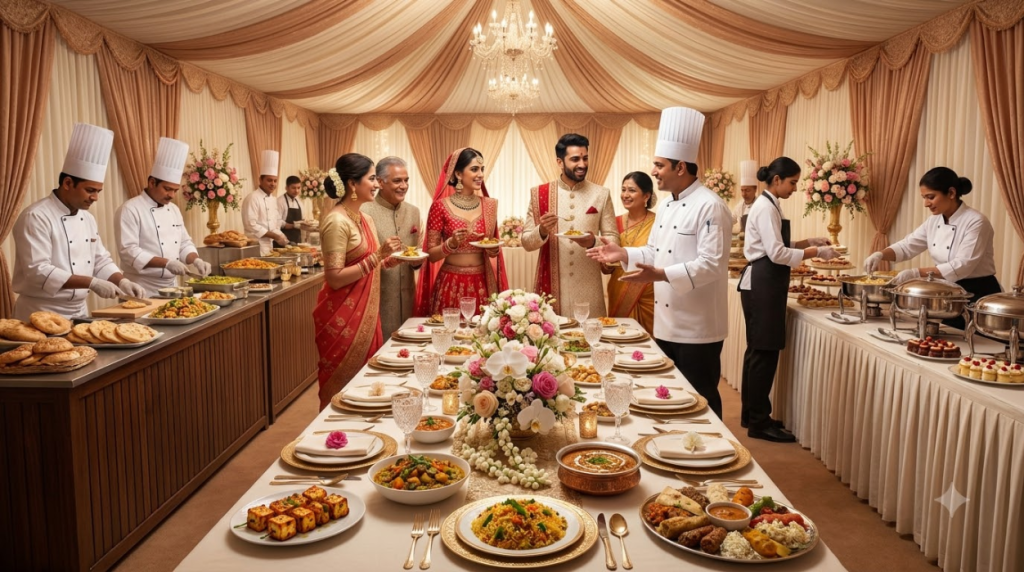
Food is one of the biggest parts of the guest experience, and it’s something your guests are likely to remember long after the wedding.
Start by considering the people you’re inviting. A menu that works for a small intimate gathering may not be practical for a large wedding with guests from different regions and age groups.
Think about the type of cuisine you want, the number of food counters, the style of service, and whether you want traditional dishes, international options, or a combination of both.
Important Catering Elements
Choose Your Cuisine
Decide whether you want a primarily Indian menu, regional specialties, international cuisine, or a combination that offers something for everyone.
Vegetarian and Non-Vegetarian Options
If you’re serving both, make sure there is sufficient variety and that the two sections are clearly organized.
Regional Dishes
Including dishes connected to your family’s region or cultural background can add a personal touch to the menu.
Live Food Counters
Live counters can make dining more interactive and allow guests to enjoy freshly prepared food.
Starters
Offer a variety of appetizers so guests have several options while they mingle or wait for the main meal.
Main Course
Choose dishes that complement each other rather than simply trying to include as many options as possible.
Desserts
Consider a mix of traditional sweets, contemporary desserts, and a few crowd favourites.
Beverages
Plan suitable hot and cold beverages throughout the event. Depending on your celebration, you may also want dedicated mocktail or beverage stations.
Kids’ Menu
If you’re expecting many children, consider including simple, child-friendly food options alongside the main menu.
Dietary Requirements
Ask your caterer about options for guests with allergies, dietary restrictions, or specific food preferences.
Food Tasting
Always schedule a tasting before finalizing the menu. This allows you to evaluate taste, presentation, portion sizes, and overall quality.
Presentation
Food presentation can also contribute to the overall wedding experience. Coordinate serving counters, tableware, food displays, and décor with the overall theme.
Late-Night Snacks
For weddings that continue late into the evening, a late-night snack counter can be a thoughtful addition, especially after dancing and entertainment.
Pro Tip : Don’t choose your wedding menu based only on how impressive it looks on paper. Think about your guests, the season, the event timing, and the type of celebration you’re hosting. A well-planned menu with fewer, better-selected dishes can often create a better experience than an unnecessarily large menu.
Choose Wedding Photography and Videography
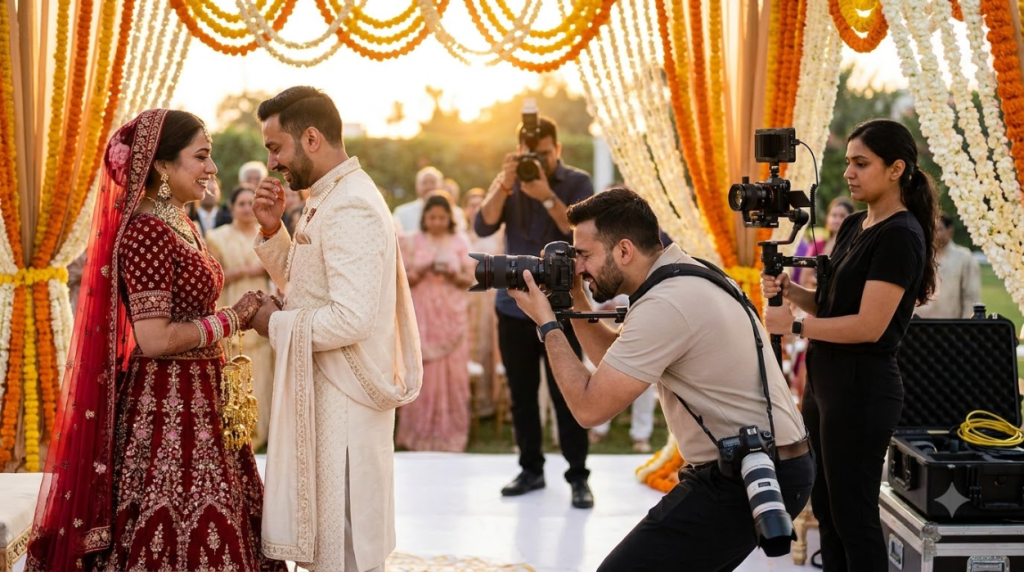
Your wedding day will pass quickly, but your photographs and videos will allow you to experience those moments again for years to come. That’s why choosing the right photography and videography team deserves careful consideration.
It’s also a good idea to book your photographer early. Popular wedding photographers can have their calendars filled months in advance, especially during busy wedding seasons.
Start by deciding what kind of visual style you prefer. Some couples love candid photographs that capture natural emotions, while others prefer traditional photography that focuses on family portraits, rituals, and important moments. Many couples choose a combination of both.
Photography and Videography Options
Candid Photography
Candid photography focuses on natural moments rather than posed photographs. This can include laughter between family members, emotional reactions, behind-the-scenes moments, and spontaneous interactions between guests.
Traditional Photography
Traditional photography is ideal for important family photographs, group portraits, ceremony moments, and formal shots with relatives and friends.
Cinematic Wedding Films
A cinematic wedding film can tell the story of your wedding through carefully edited footage, music, emotional moments, and creative storytelling.
Pre-Wedding Photography
A pre-wedding shoot gives couples an opportunity to create relaxed photographs before the wedding. You can choose a location that has personal meaning or simply select a beautiful setting that matches your preferred style.
Drone Photography
Drone photography can capture impressive aerial views of the venue, outdoor ceremonies, large gatherings, and wedding entrances. Make sure your photographer follows all applicable local rules and permissions for drone use.
Same-Day Edits
Some photography teams offer short edited videos or highlights that can be played during the wedding reception. This can be a fun way for guests to see moments from earlier in the celebration.
Wedding Albums
Ask whether physical albums are included in the package and what options are available for the cover, number of pages, printing quality, and design.
Number of Photographers
For larger weddings, having multiple photographers and videographers can make it easier to capture different ceremonies, guests, family groups, and candid moments happening at the same time.
Delivery Timeline
Always ask when you can expect your edited photographs, videos, wedding film, and albums. Delivery timelines can vary considerably between photographers.
Questions to Ask Your Photographer
Before booking, ask:
- What is included in the package?
- How many photographers and videographers will attend?
- How many edited photographs will we receive?
- Is a wedding film included?
- Is a pre-wedding shoot included?
- Are drone services available?
- Is a same-day edit included?
- Are wedding albums included?
- How long does final delivery take?
- What happens if the wedding runs beyond the scheduled hours?
- Do you charge extra for additional hours?
- What is your backup plan if a photographer becomes unavailable?
Don’t choose a photographer based only on the number of photographs included. Look through complete wedding galleries and pay attention to the consistency, editing style, lighting, emotional moments, and overall storytelling.
Plan Entertainment and Music
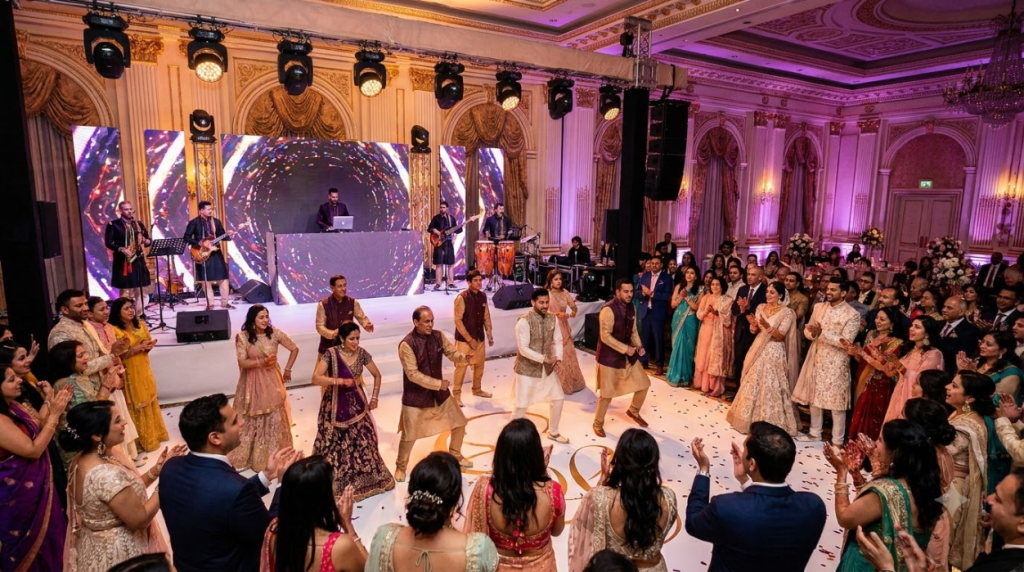
Entertainment can set the energy of your wedding and determine how guests experience the celebration. The right entertainment should complement your wedding style while giving guests opportunities to enjoy themselves.
Think about your guest list before making your choices. A lively DJ and dance floor may be perfect for a large Sangeet or reception, while a live singer or acoustic performance may be more appropriate for an intimate ceremony.
Entertainment Options
DJ
A professional DJ can keep the dance floor active and adapt the music according to the mood of the event.
Live Band
A live band can add energy and atmosphere to a reception, Sangeet, or cocktail evening.
Singer
A solo singer or vocalist can create a more intimate musical experience during dinner, ceremonies, or special couple moments.
Dhol
Dhol performances can create an energetic atmosphere, particularly during couple entries, baraats, and celebratory moments.
Dance Performances
Family and friends often prepare special performances for weddings. You can also hire professional dancers to create choreographed performances.
Couple Entry
Your entrance can become one of the most memorable moments of the celebration. From traditional entrances to contemporary concepts, choose something that reflects your personality as a couple.
Family Performances
Encourage family members and friends to participate. These performances often become some of the most personal and entertaining moments of a wedding.
Choreographer
If you’re planning a Sangeet or multiple family performances, a choreographer can help participants learn routines and coordinate the final performance.
Anchor or Host
A professional host can keep the event moving smoothly, introduce performances, interact with guests, and help maintain the energy throughout the celebration.
Magic Shows
Magic and interactive performances can be a fun addition for younger guests or family-friendly celebrations.
Fire Performers
Fire-based performances can create a dramatic visual experience, but they should only be considered where legally permitted and when handled by qualified professionals following appropriate safety measures.
Interactive Guest Activities
Photo booths, games, couple quizzes, guest messages, and other interactive activities can give guests something to enjoy between ceremonies and performances.
The goal isn’t to include every possible form of entertainment. Choose activities that match your guests, venue, wedding style, and budget.
Plan the Wedding Ceremonies
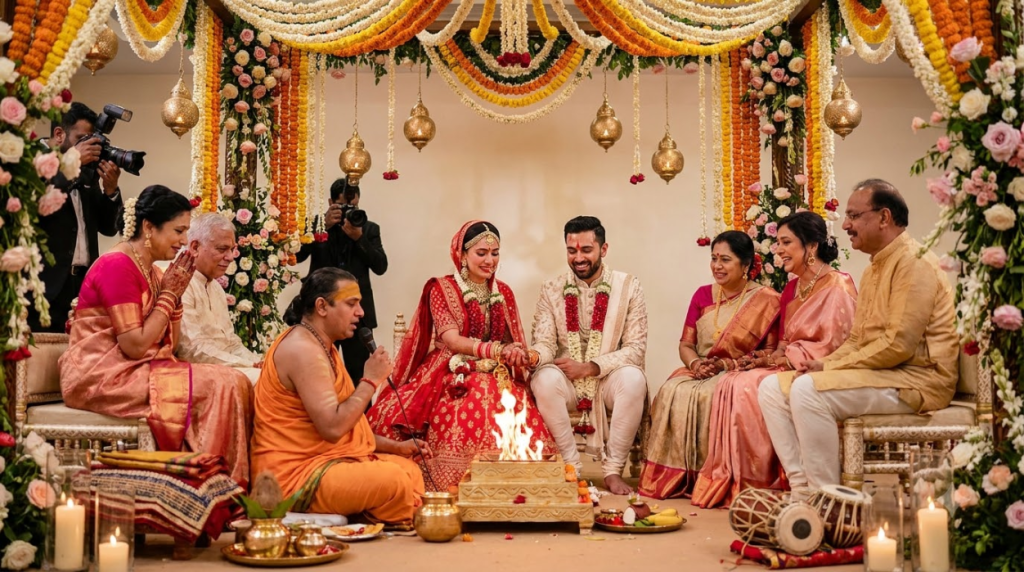
Indian weddings often involve several celebrations rather than a single event. Each ceremony may have its own guest list, venue, décor, food, outfits, photography requirements, and timeline.
The exact events will depend on your family’s traditions and preferences.
Engagement
The engagement can be an intimate gathering or a larger celebration. Consider the venue, ring ceremony setup, couple seating, photography, décor, food, and entertainment.
Haldi
Haldi celebrations are usually colourful, energetic, and informal. Bright décor, floral elements, comfortable seating, music, and an appropriate space for the ceremony can make the event more enjoyable.
Mehendi
For the Mehendi ceremony, make sure there is enough comfortable seating for the bride and guests. You can combine the ceremony with colourful décor, music, food, games, and entertainment.
Sangeet
The Sangeet is often one of the most entertainment-focused wedding events. Plan the stage, dance floor, sound system, performances, choreography, lighting, and overall program carefully.
Wedding Ceremony
The main wedding ceremony requires careful coordination between the couple, family, priest or officiant, photographer, décor team, and venue staff. Make sure the mandap, seating, rituals, music, and ceremony timeline are finalized in advance.
Reception
The reception is usually focused on welcoming guests, celebrating the couple, dining, entertainment, speeches, and photographs. Plan the stage, couple entry, dinner, music, and guest experience accordingly.
Vidaai
Vidaai is an emotional part of many Indian weddings. Coordinate the timing, transportation, photography, and family arrangements beforehand so the moment can happen smoothly without unnecessary confusion.
What to Plan for Every Ceremony
For each event, consider:
- Venue
- Guest count
- Décor
- Catering
- Entertainment
- Photography
- Outfits
- Timeline
- Special rituals
Creating a separate mini-plan for each ceremony can make the overall wedding much easier to manage.
Invitations and Guest Communication
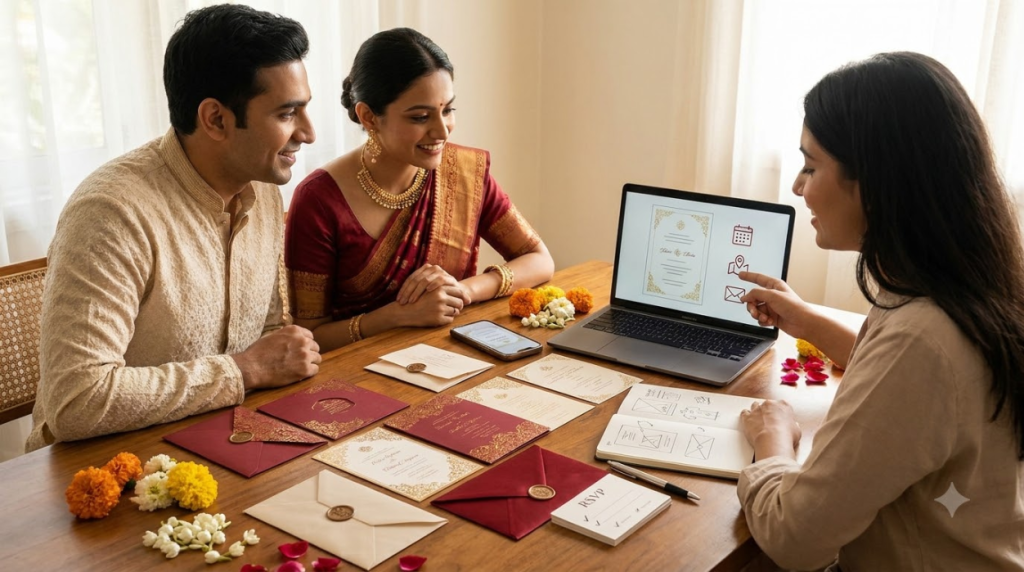
Your invitation is often the first introduction guests receive to your wedding. It should provide the essential information clearly while reflecting the style of your celebration.
You can choose between traditional printed invitations, digital invitations, or a combination of both.
Save-the-Date
If you’re planning a large wedding or inviting guests from different cities, sending a save-the-date early can help them make travel and accommodation arrangements.
Digital Invitations
Digital invitations are convenient for sharing event details, venue locations, maps, schedules, and RSVP information. They can also make it easier to update guests if plans change.
Printed Invitations
Traditional printed invitations remain popular for formal weddings and can become a keepsake for family members.
RSVP Management
Keep track of confirmations so you can give your venue and caterer a more accurate guest count. Digital RSVP forms can make this process easier.
Wedding Website
A wedding website can bring important information together in one place, including:
- Wedding schedule
- Venue details
- Directions
- Accommodation information
- RSVP form
- Dress code
- Couple’s story
- Contact information
Venue Directions
Don’t assume every guest will know how to reach the venue. Share the complete address, map location, parking details, and useful landmarks.
Accommodation Information
For guests travelling from outside the city, provide information about nearby hotels, transportation, check-in arrangements, and contact details where necessary.
Dress Code
If you’re planning specific dress codes for different functions, mention them clearly in the invitation or event communication.
Event Schedule
If your wedding includes multiple functions, share the dates and timings clearly so guests know when and where they need to be.
Reminder Messages
Send timely reminders before each event, particularly for destination weddings or celebrations involving multiple venues.
Clear communication can prevent confusion and help your guests feel more comfortable throughout the wedding.
Wedding Vendor Checklist
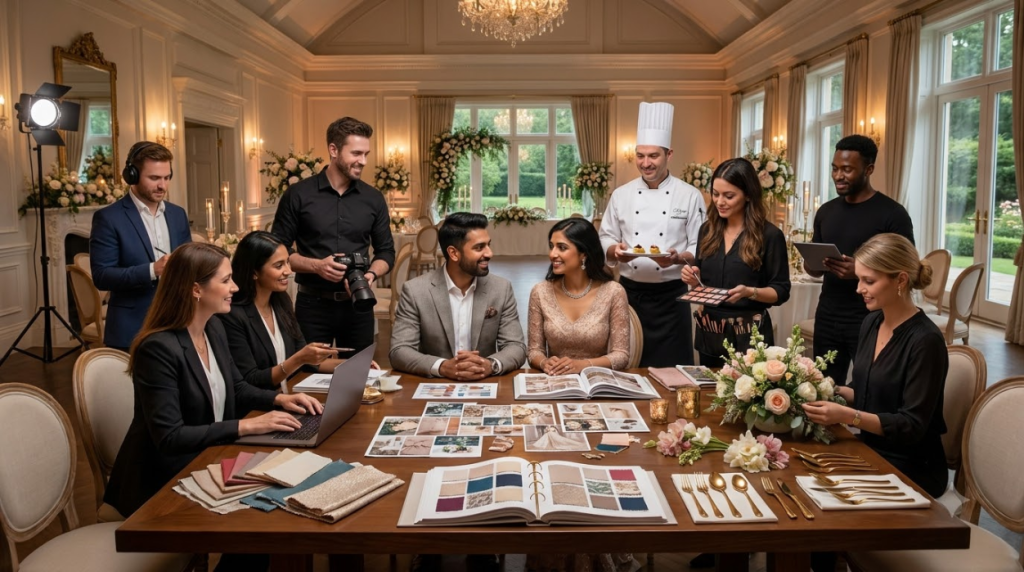
A wedding involves many different vendors, and keeping track of them can become difficult without a proper checklist.
Depending on your celebration, you may need:
- Wedding planner
- Venue
- Caterer
- Decorator
- Photographer
- Videographer
- Makeup artist
- Hairstylist
- Mehendi artist
- DJ or band
- Choreographer
- Invitation designer
- Cake vendor
- Florist
- Transportation provider
- Guest accommodation
- Entertainment providers
- Return gift supplier
You don’t necessarily need every vendor on this list. Your requirements will depend on the type, size, location, and style of your wedding.
Create a simple vendor tracker with the vendor’s name, contact information, service, total cost, deposit paid, remaining balance, contract status, and booking date.
This can help you stay organized and avoid missing important payments or confirmations.
How to Choose the Right Wedding Vendors
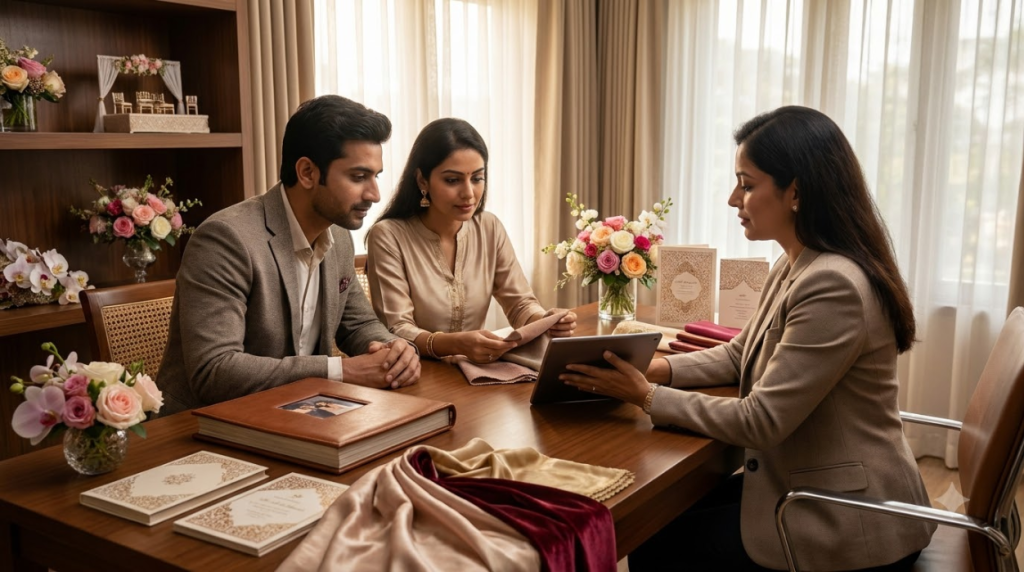
The vendors you choose can have a major impact on the quality and smoothness of your wedding. A beautiful concept can quickly become stressful if a vendor isn’t reliable or doesn’t deliver what was agreed upon.
Don’t make your decision based solely on the lowest price. Consider the vendor’s experience, portfolio, communication, reviews, availability, and ability to handle your specific requirements.
Portfolio
Look at complete examples of their previous work rather than only a few selected photographs or videos. This gives you a better understanding of their consistency and quality.
Reviews
Read reviews from previous clients and look for comments about punctuality, professionalism, communication, quality, and how the vendor handled unexpected situations.
Experience
Ask how long they’ve been working in the wedding industry and whether they’ve handled celebrations similar to yours.
Pricing
Compare quotations from different vendors, but make sure you’re comparing similar services. The cheapest quotation isn’t always the best value.
Package Inclusions
Ask exactly what is included in the quoted price. Make sure you understand whether setup, travel, additional hours, equipment, editing, delivery, or other services are included.
Availability
Confirm that the vendor is available for every date and time you require. For weddings with multiple ceremonies, check whether they can cover all the events.
Contract
Always have important agreements documented. The contract should clearly explain the services, pricing, payment schedule, responsibilities, cancellation terms, and delivery expectations.
Cancellation Policy
Understand what happens if you need to postpone or cancel the booking. Also ask whether deposits are refundable or transferable.
Payment Schedule
Keep track of the deposit, milestone payments, and final balance. Avoid confusion by confirming every payment in writing.
Backup Arrangements
Ask what happens if the vendor faces an emergency on your wedding day. Professional vendors should have reasonable backup arrangements where applicable.
Communication
Choose vendors who communicate clearly and respond within a reasonable timeframe. Good communication before the wedding is often a strong indicator of how smoothly the planning process will work.
Previous Wedding Experience
If possible, choose vendors who understand the practical demands of weddings. Experience with multiple ceremonies, large guest groups, tight timelines, and venue coordination can make a significant difference.
Questions to Ask Every Vendor
Before paying a deposit, ask:
- What exactly is included in the package?
- What is the total cost?
- Are there any additional or hidden charges?
- What is the payment schedule?
- Is a written contract provided?
- What is the cancellation or postponement policy?
- Are you available for all our wedding events?
- How much setup time do you need?
- Do you provide your own equipment and staff?
- What happens if there is an unexpected issue on the wedding day?
- Do you have backup arrangements?
- Who will be our main point of contact?
- When do you need the final details from us?
Taking the time to ask these questions before booking can prevent misunderstandings later and help you choose vendors who are genuinely suited to your wedding.
Common Wedding Planning Mistakes to Avoid
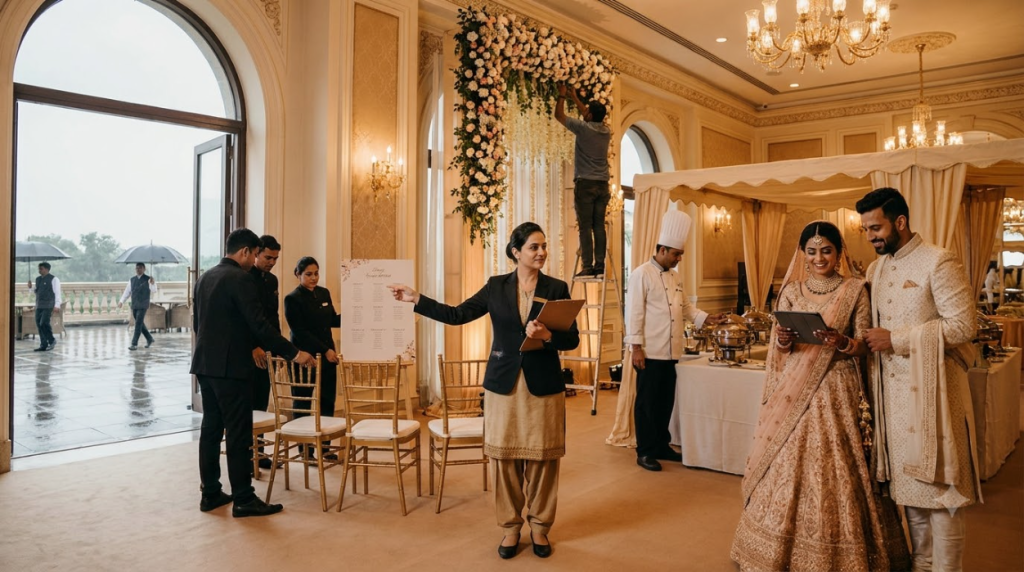
Even with the best intentions, wedding planning can become stressful when small details are overlooked. Many problems can be avoided simply by planning early, keeping everything documented, and leaving enough room for unexpected situations.
Starting Without a Budget
One of the most common mistakes is making bookings before deciding how much you can realistically spend. Without a clear budget, it’s easy to overspend on the first few elements and struggle to cover essential expenses later.
Set your overall budget first and divide it between major categories such as the venue, catering, décor, photography, outfits, entertainment, and other services.
Booking Vendors Without Comparing Packages
Don’t book the first vendor you speak to simply because their portfolio looks impressive. Compare packages, inclusions, pricing, experience, reviews, and availability before making a decision.
Two vendors may quote similar prices while offering very different services.
Underestimating Guest Numbers
Your guest count affects almost everything, including venue size, catering, seating, invitations, transportation, and accommodation.
Start with a realistic estimate and update the number as RSVPs come in.
Booking the Venue Before Finalizing the Approximate Guest Count
A venue should comfortably accommodate your expected guests. Booking too early without even an approximate guest count can leave you with a space that’s either too small or unnecessarily large.
Spending Too Much on Décor
Beautiful décor can transform a venue, but it shouldn’t consume your entire wedding budget.
Identify the areas that will have the biggest visual impact, such as the entrance, mandap, stage, dining area, and couple seating, and prioritize those instead of decorating every corner.
Forgetting a Contingency Fund
Unexpected expenses are common during weddings. Additional guests, last-minute changes, transportation issues, overtime charges, or extra décor requirements can all increase your costs.
Keep a portion of your budget aside specifically for unexpected expenses.
Not Reading Contracts
Never rely only on verbal promises. Read every vendor agreement carefully and make sure you understand the services, pricing, payment schedule, cancellation policy, delivery timeline, and additional charges.
If something important was promised during a conversation, make sure it’s included in writing.
Leaving Vendor Bookings Until the Last Minute
Popular photographers, decorators, makeup artists, venues, and entertainment providers can get booked well in advance.
Waiting too long may leave you with fewer choices or force you to compromise on the vendors you actually wanted.
Ignoring Weather Backup Plans
Outdoor weddings can be beautiful, but weather can be unpredictable.
If you’re planning an outdoor function, make sure there is a realistic backup arrangement for rain, extreme heat, strong winds, or other unsuitable conditions.
Trying to Manage Everything Yourself
It’s natural for couples and families to want to stay involved, but trying to personally manage every vendor, guest, payment, timeline, and setup on the wedding day can take you away from the celebration itself.
Having a trusted coordinator or professional wedding planner handle the logistics can allow you to actually enjoy the day.
Not Creating a Detailed Wedding-Day Timeline
Without a clear timeline, ceremonies, photography, meals, entertainment, and vendor setup can easily overlap or get delayed.
Create a detailed schedule and share the relevant information with your vendors and key family members before the wedding.
Forgetting Transportation and Accommodation
Guests travelling from outside the city may need transportation and accommodation arrangements. Confirm these details early, particularly for destination weddings or celebrations involving multiple venues.
Not Assigning Someone to Coordinate Vendors
Someone needs to be available on the wedding day to answer vendor questions, manage deliveries, handle last-minute changes, and keep the schedule moving.
That person shouldn’t have to be the bride or groom. Assign a trusted family member, coordinator, or professional planner to take responsibility for these tasks.
How to Make Your Wedding More Personal
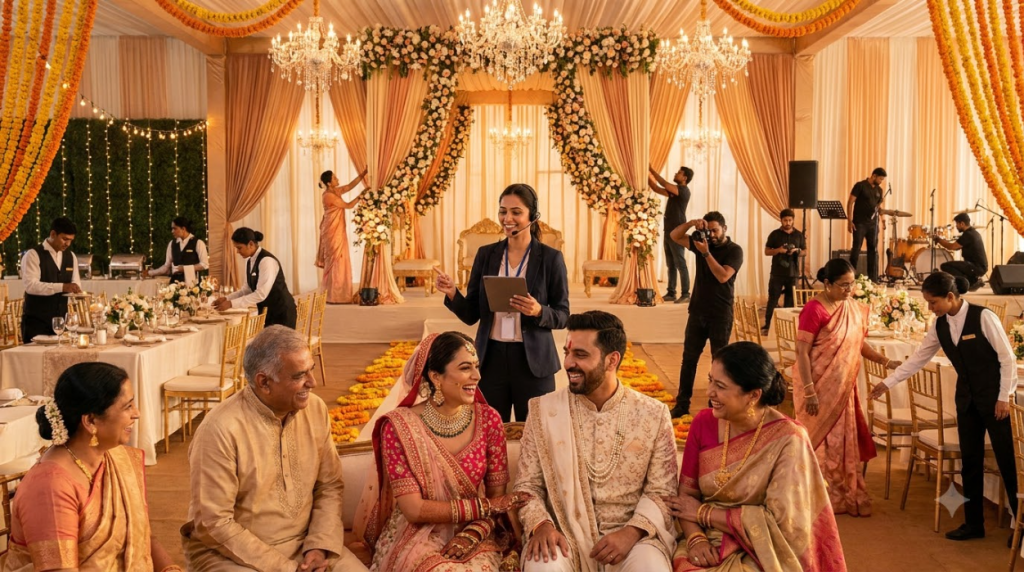
A beautiful wedding isn’t only about expensive décor or impressive venues. The most memorable celebrations often include small details that tell your story as a couple.
Instead of copying a wedding you’ve seen online, think about what makes your relationship unique and find ways to bring those details into the celebration.
Personalized Welcome Boards
Create a welcome board featuring your names, wedding date, a meaningful quote, or a short message for your guests.
Couple Story Display
Create a timeline showing important moments from your relationship, from your first meeting to your engagement and wedding day.
Family Photo Wall
Display photographs of parents, grandparents, siblings, and other important family members. It can add an emotional and personal touch to the venue.
Customized Wedding Favours
Choose wedding favours that reflect your personality, culture, interests, or the theme of your celebration rather than generic gifts.
Signature Cocktails and Mocktails
Create a special drink inspired by the couple. You can give it a meaningful name or connect it to an important memory.
Personalized Menu
Add family recipes, regional specialties, or dishes that have a special meaning to you. Food can be one of the easiest ways to bring your story into the celebration.
Couple Initials
Your initials can be subtly incorporated into invitations, menus, décor, dance floors, table settings, or other wedding elements.
Meaningful Music
Choose songs that remind you of important moments in your relationship. You can use them during your entrance, first dance, family performances, or other special moments.
Personalized Vows
If your ceremony allows it, writing your own vows can make the wedding feel deeply personal and emotional.
Memory Tables
Create a small display featuring photographs, letters, keepsakes, or objects that represent important moments in your relationship.
Customized Guest Books
Instead of a traditional guest book, create an interactive version where guests can leave messages, advice, memories, or wishes for your future together.
Interactive Photo Booths
Create a photo area with personalized props, backgrounds, and décor that match your wedding theme.
Personal Wedding Hashtags
A unique wedding hashtag can help you collect photographs and social media memories from your guests in one place.
The goal isn’t to personalize every single element. Choose a few details that genuinely mean something to you and let them become part of the story your guests experience.
How Confetti Tales Can Help
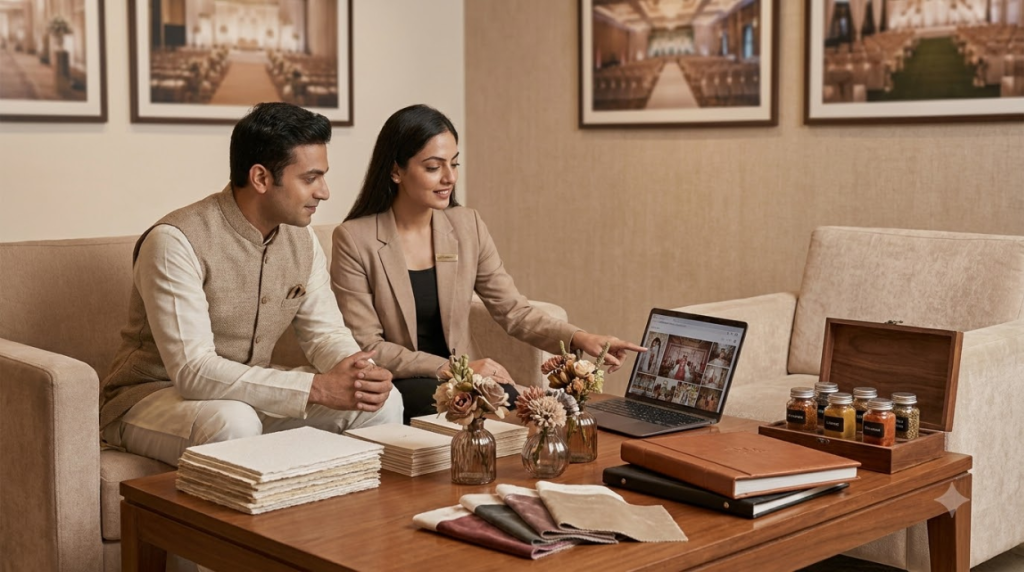
Planning a wedding involves hundreds of small decisions, and coordinating all the different vendors can quickly become overwhelming.
At Confetti Tales, we help bring those details together so you can focus on enjoying the celebration rather than managing it.
From the first concept to the final guest goodbye, our team can help coordinate the different elements that make your wedding unique.
Our Wedding Services Can Include
- Wedding planning and coordination
- Theme development
- Venue décor
- Floral arrangements
- Balloon décor where appropriate
- Mandap and stage décor
- Catering coordination
- Entertainment coordination
- Photography coordination
- Guest management
- Wedding invitations
- Customized event setups
- Vendor coordination
- Wedding-day management
Whether you’re planning an intimate celebration or a large multi-day wedding, we can help turn your ideas into a cohesive experience.
You dream about the wedding. We take care of everything that brings it to life—from the first decoration idea to the final guest goodbye.
With the right planning and professional coordination, you can spend less time worrying about logistics and more time celebrating with the people who matter most.
Frequently Asked Questions
Ideally, start planning your wedding as early as possible, especially if you have a specific venue, photographer, decorator, or wedding date in mind. Starting early gives you more choices and enough time to compare vendors, plan your budget, and make decisions without unnecessary pressure.
Wedding costs in Delhi NCR can vary significantly depending on the guest count, venue, catering, décor, photography, outfits, entertainment, and level of customization. An intimate celebration can have a very different budget from a large luxury wedding, so it’s best to establish your guest count and priorities before setting the final budget.
Start with your guest count, budget, wedding style, and preferred location. Then compare venue capacity, catering, accommodation, parking, décor restrictions, vendor policies, indoor and outdoor options, and weather backup arrangements.
There is no universal number. Your guest list should reflect your budget, venue capacity, family expectations, and the type of celebration you want. Start with an initial list and gradually refine it as you confirm your priorities and receive RSVPs.
It’s best to book your photographer early, particularly if you’re getting married during a busy wedding season or have a specific photographer in mind. Popular photographers can have their calendars booked months in advance.
Start with your personal style, the venue, your preferred colours, and the overall atmosphere you want to create. Look for inspiration and create a mood board before finalizing the theme so you can see how different décor elements work together.
Your requirements will depend on your wedding size and style, but common vendors include a venue, caterer, decorator, photographer, videographer, makeup artist, hairstylist, mehendi artist, entertainment provider, invitation designer, florist, transportation provider, and wedding planner.
Start with a clear budget and prioritize the elements that matter most to you. Compare vendor packages, avoid unnecessary extras, keep your guest list realistic, and allocate a contingency fund. You can also choose a simpler décor concept while focusing your spending on the parts of the wedding that have the biggest impact.
Include vendor setup, couple preparation, guest arrival, ceremonies, photography sessions, meals, performances, speeches, couple entries, entertainment, and departure times. Give each vendor and key family member the information they need to understand their responsibilities.
Yes. Confetti Tales can help coordinate different aspects of your wedding, including planning, theme development, décor, floral arrangements, catering coordination, entertainment, photography coordination, guest management, vendor coordination, and wedding-day management.
Yes. Wedding décor can be customized around your preferred theme, colour palette, venue, guest count, and budget. The goal is to create a celebration that feels personal while making the most of the space and resources available.
Final Thoughts
Planning a wedding isn’t about making every single detail perfect. It’s about creating an experience that reflects who you are as a couple and gives you the opportunity to celebrate with the people you love.
Start early, create a realistic budget, choose your venue carefully, and work with reliable vendors. Personalize the celebration with details that tell your story, and always have backup plans for the things you can’t control.
Most importantly, don’t feel like you have to manage everything yourself. Your wedding day should be about celebrating—not running around checking whether the caterer has arrived or whether the décor is ready.
With thoughtful planning and the right support, you can create a wedding that’s beautiful, organized, personal, and genuinely enjoyable.
Ready to Turn Your Wedding Vision Into Reality?
Get in touch with Confetti Tales and let our team help you plan, design, and coordinate a wedding celebration that’s beautiful, personal, and unforgettable.
Your dream wedding deserves more than beautiful décor. It deserves an experience you’ll remember for a lifetime.